
Cycles
We mirror nature, are carried by the same rhythms, and subject to the same silent laws. Living gardens, where things are born, fade, and transform. Roots remain anchored to the soil, yet flowers release their seeds to the wind – trusting that unseen currents will carry them to distant, unknown places. What we lose becomes part of what we are becoming.
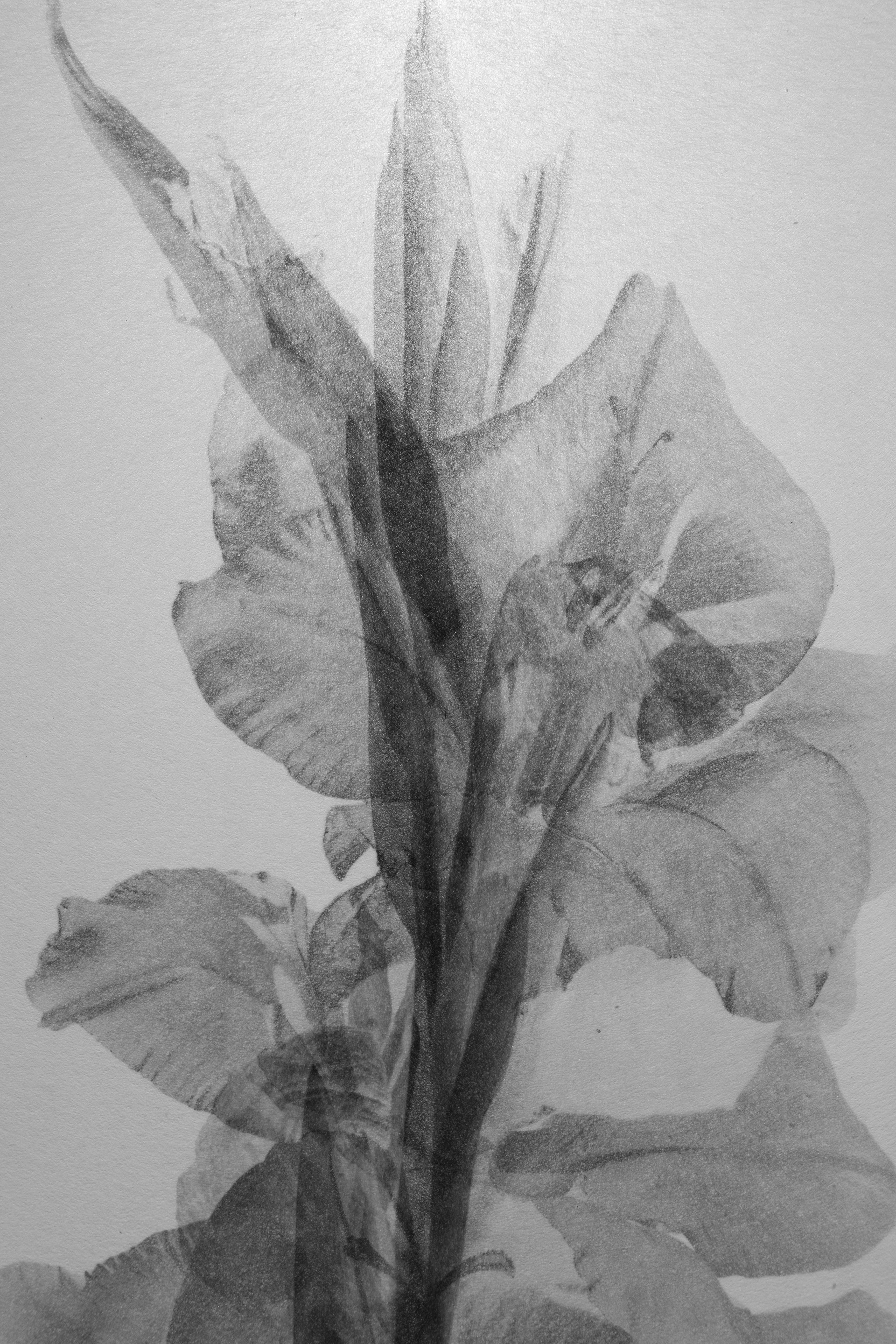
Cycles is a contemplation on transformation. An invitation to observe how life changes form. How nothing truly disappears. Things transform. Reconfigure. Return. For several months, Kamila Solarz photographed a variety of flowers, each one observed closely through its own process of unfolding, fading, and collapsing. She returned to the studio each day, paying attention to every stage of their transformation. Not to impose a narrative, but to receive one. A single flower, seen over time, became many images. These are layered softly on delicate Japanese kozo paper of only 7.3 g/m², forming each final piece. Fragile, translucent, and sensitive to light and touch, the paper echoes the flower itself.
Light passes through the works. Time does, too. Cycles have no clear beginning or ending. What we see is both presence and absence, the visible and the hidden. A record of what was and what remains. Each image floats in liminal space between negative and positive, between shadow and light. Like memory, these layers do not replace each other, they accumulate. Everything stays, in another form. Each artwork shows a series of moments–an intimate, slow dialogue between artist and flower, between what is visible and what is vanishing.
The project found its home at Taula Studio Gallery in Barcelona, where it was developed and presented in a solo exhibition. Its roots lie in a long, unfolding process of research and experimentation. Textures, transparencies, and natural rhythms that echo our own have long been present in her work. A journey to India marked a turning point in Kamila’s practice, reshaping her understanding of cycles, transitions, and what it means to inhabit a process, not as something to be completed, but as a continuous becoming.
The exhibition mirrors the same structure. First, we meet the final compositions—quiet, ethereal, complete. Then, the process is revealed: test prints, fragments, traces of each flower’s transformation. This reversed order becomes a cycle in itself. The works are accompanied in quiet dialogue by the floral compositions created by Haydée Barciela. Alongside them, an art book designed by Paula Illescas—a tactile object that reveals the layers of the works, allowing one to reach them and engage with them individually.
Text by Arantxa Zulema
To request the catalogue please contact: studio@kamilasolarz.com


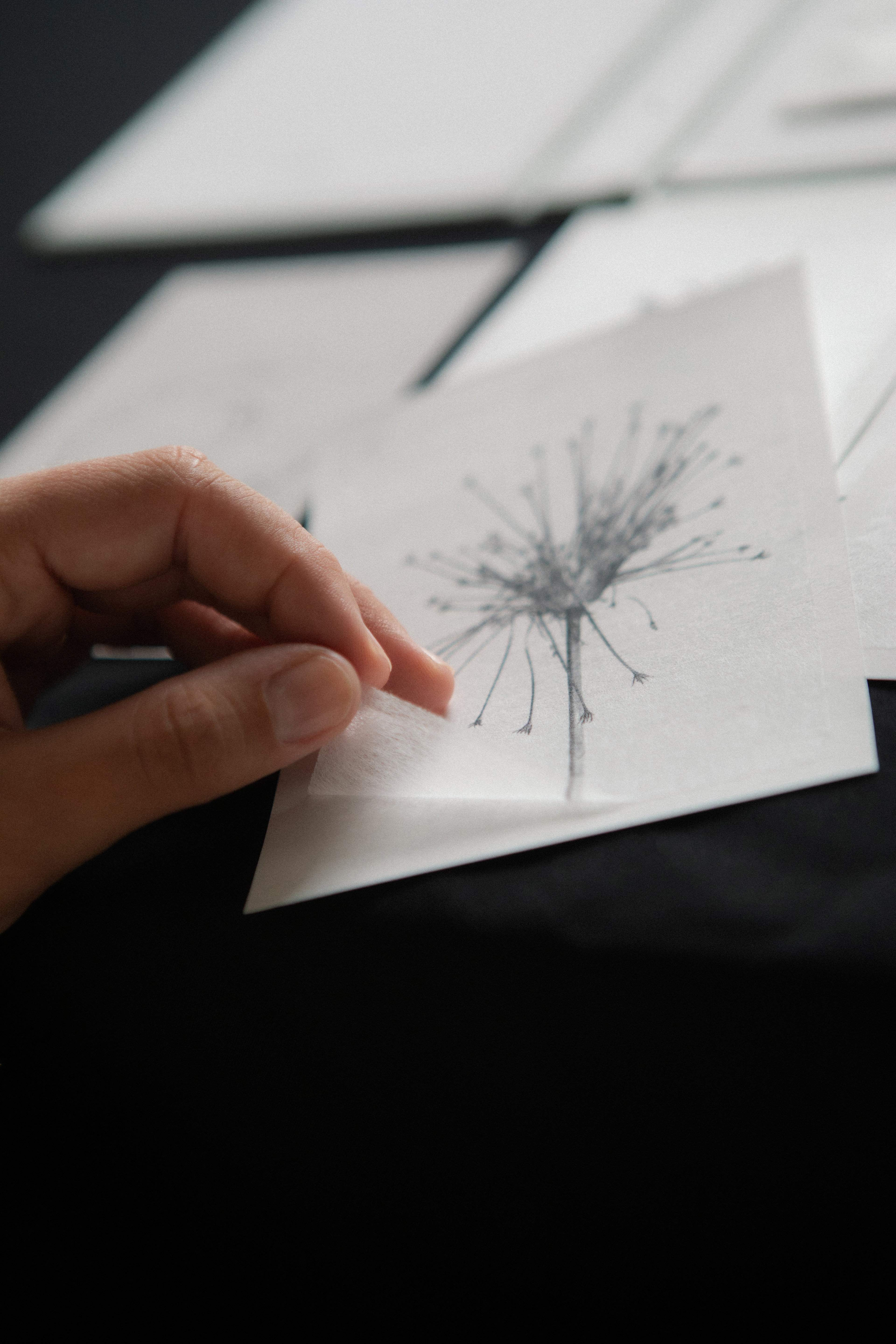
I explored many different papers until I found the one that best reflected the project’s exploration. The paper I chose is made of 100% kozo, the inner bark of the mulberry tree. Printing required numerous trials and the development of a personal technique. At only 7.3 g/m², the paper is almost transparent — remarkably delicate, yet astonishingly resistant for its weight.
The images of the different stages of a flower’s transformation are physically layered one on top of another, without any adhesive joining them. Through the delicacy of the paper and its fibrous structure, combined with patience and careful handling, the sheets merge to create a single composition, where no layer replaces another, but instead they accumulate.

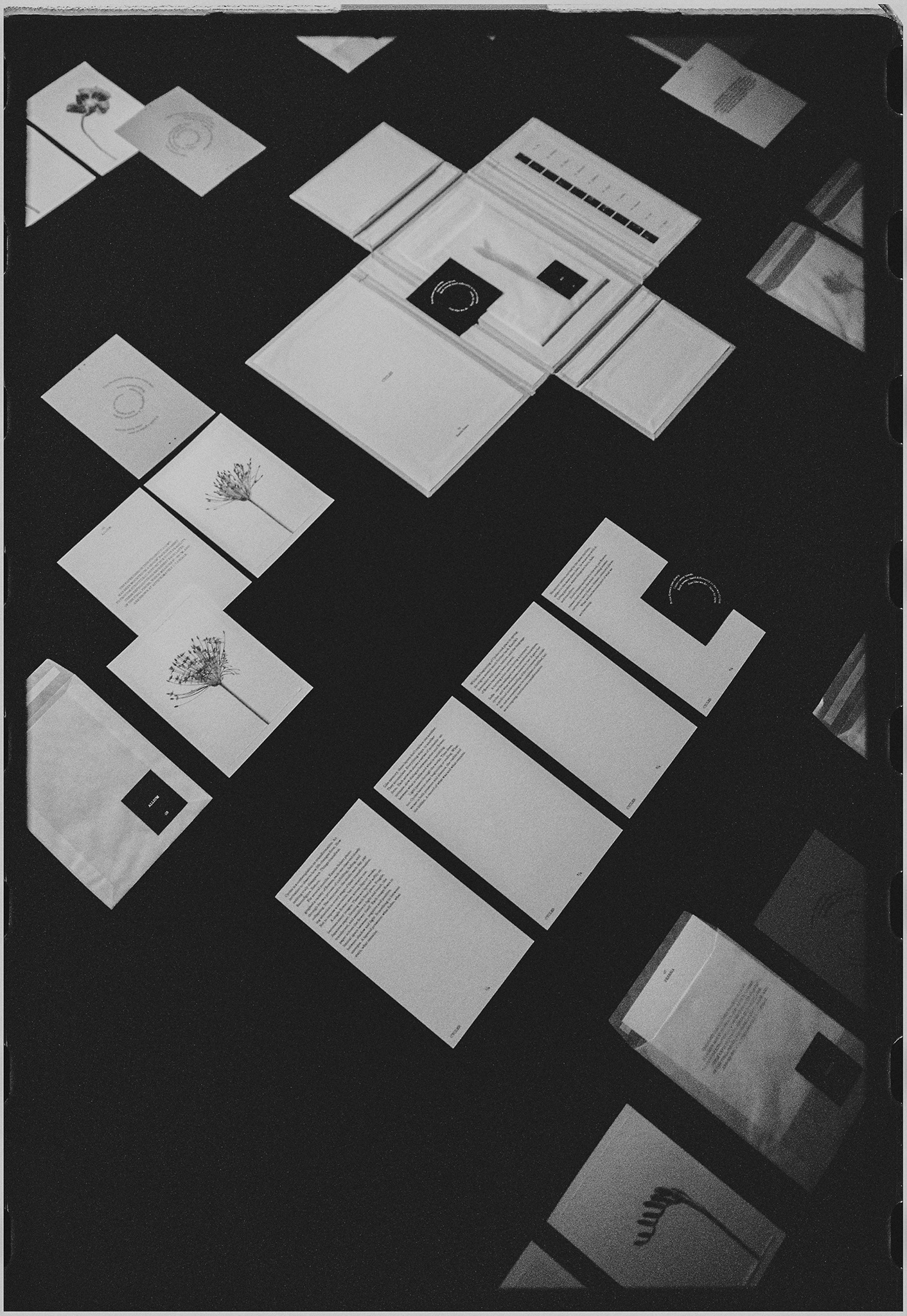
The book accompanying the project reveals the layers of each piece. It was designed as a handmade box containing ten envelopes, each holding a small reproduction of the photographs printed on the same paper as the final artworks, along with a poem about each one, written by the artist. The paper has been mounted on a 150 g/m2 backing sheet for structural support due to its fragility


The frames are developed entirely as bespoke pieces, created specifically for the artworks. They echo the layered structure of the composition itself, comprising three distinct layers, with the photographs positioned on the central plane. They are made from carefully selected ash wood, meticulously crafted and finished to highlight its natural grain and durability.The greatest challenge was allowing the frame to be viewed from both sides while simultaneously ensuring the absolute safety of such delicate artworks at this scale. The construction includes small, precisely finished details, with screws that have undergone a subtle oxidation process, supporting the planes and the overall structure. Additionally, the paper sheets are secured with delicate magnets. While the sheets hold in place without them, the magnets provide complete security and maintain the tension of the paper over time.


